

Albuquerque | June 27–29, 2024
Welcome
This is our second conference held in Albuquerque. The first in 2014, “Promoting the Rights of Children: Community Participation and Dialogue” was possible because of the dedication and collaborative spirit of the host community. This year is no different. This community, known for its beauty, art, diversity, and strong cultural identities, once again brings our attention to the rights of humanity. We thank them for their strong organizational support of the Mosaic of Marks, Words, Material exhibition and atelier and the 2024 NAREA Summer Conference.
This summer, we celebrate the 20th summer conference NAREA has organized for educators in North America. Over those 20 years, we collaborated with Reggio Children and local host communities to offer innovative professional development experiences, bringing together dedicated educators across North America to promote and defend the rights of children, families, and teachers of all cultures.
In that celebratory spirit (cue the confetti), we welcome Marina Castagnetti, Isabella Meninno, and interpreter Jane McCall from Reggio Emilia, Italy. It is through their sharing and exchange that we build our interpretations of the values, philosophies, and experiences of Reggio Emilia’s municipal infant-toddler centers and schools of childhood. For that, we are grateful.
Please enjoy this time of being together in relationship and connection as we craft a better future for our children, our communities, and ourselves.
Program
Thursday, June 27
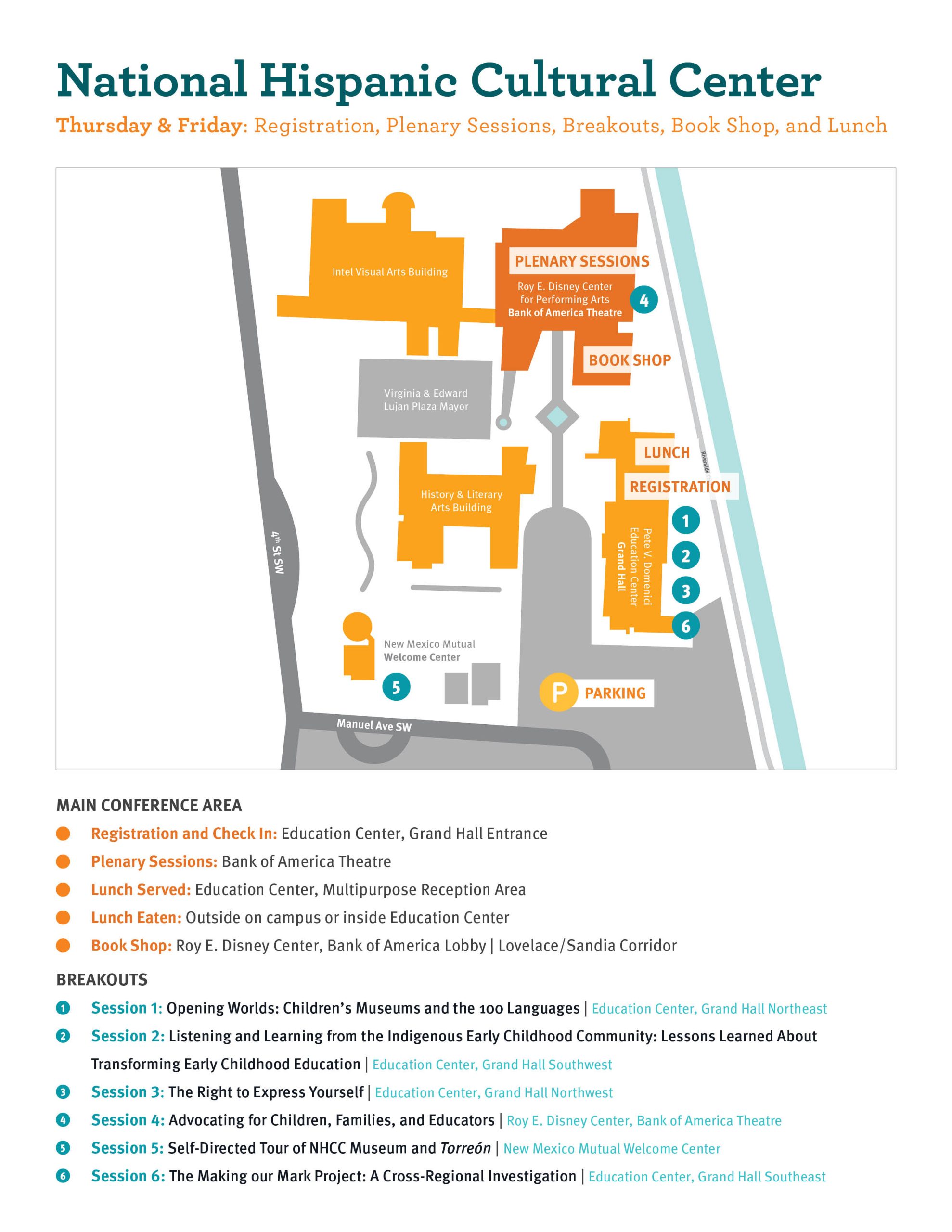
National Hispanic Cultural Center
Check In Opens
Education Center | Grand Hall Entrance
Welcome
Roy E. Disney Center for Performing Arts | Bank of America Theatre
Loris Malaguzzi and the Values of the Reggio Emilia Educational Project of the Infant-Toddler Centers and Preschools
Marina Castagnetti and Isabella Meninno
Mid-Morning Stretch
Bank of America Theatre Lobby
Announcements and Lunch
Lunch Served in Education Building | Multipurpose Reception Area
The Culture of the Atelier: The Hundred Languages of Children and Adults in Daily Contexts
Marina Castagnetti and Isabella Meninno
End of Day
Friday, June 28
National Hispanic Cultural Center
Morning Coffee
Bank of America Theatre Lobby
Welcome
Bank of America Theatre
Designing Educational Environments as Relational Spaces – Imaginaries in Clay: Connections Between Expressive Languages in Children’s Research [Part 1]
Marina Castagnetti and Isabella Meninno
Mid-Morning Stretch
Bank of America Theatre Lobby
Announcements and Lunch
Lunch Served in Education Building | Multipurpose Reception Area
Breakouts
Session 2
Listening and Learning from the Indigenous Early Childhood Community: Lessons Learned About Transforming Early Childhood Education
Session 3
The Right to Express Yourself
Session 4
Advocating for Children, Families, and Educators
Session 5
Self-Directed Tour of NHCC Museum and Torreón
Session 6
The Making our Mark Project: A Cross-Regional Investigation
End of Day
Saturday, June 29
NM Museum of Natural History and Science
Venue Opens
Dynatheater | Enter at Group Entrance
Welcome
Dynatheater
Designing Educational Environments as Relational Spaces – Imaginaries in Clay: Connections Between Expressive Languages in Children’s Research [Part 2]
Marina Castagnetti and Isabella Meninno
Mid-Morning Stretch
Dynatheater
Announcements and Lunch
Grab Lunch in Multipurpose Room
Ateliers
Session 2
Celebrating the Diversity of Languages: A Colorful Perspective
Session 3
Visualizing Vibrations and Sound
Session 4
Encounters with Metallic Mark-Making
Session 5
Printmaking: Repetition, Rhythm, and Resistance
Session 6
Connecting to Place: A Clay Atelier
Session 7
Mosaic of Marks, Words, Material Exhibition and Atelier
Session 8
Making Marks With our World: Inspiration From the Exhibition
Session 9
Educational Interactive Gallery
Venue Maps




Featured Speakers
Marina is a former teacher at Diana municipal preschool, where she worked with the historical team Loris Malaguzzi and Vea Vecchi. Later she worked with the Documentation and Educational Research Center of the Preschools and Infant-toddler Centers – Istituzione of the Municipality of Reggio Emilia. Today, through Reggio Children, she meets with educators around the world who are interested in understanding more about the Reggio Emilia Approach.
Isabella has been an atelierista with the Preschools and Infant-toddler Centers – Istituzione of the Municipality of Reggio Emilia since 1999. Currently she is working in the role of atelierista with the municipal preschool and primary school at the Malaguzzi International Centre in Reggio Emilia. For Reggio Children, she has collaborated on the realization of publishing and exhibition projects, ateliers at the Loris Malaguzzi International Center, and professional development initiatives. She also worked as atelierista in the Documentation and Educational Research Center and at the Diana, Anna Frank, Gulliver, and Martiri di Sesso municipal preschools in Reggio Emilia.

Jane has worked as a freelance interpreter and translator for Reggio Children for over 20 years. She has interpreted for Reggio educators at international study groups in Reggio Emilia, Italy, as well as at conferences with Reggio speakers in Australia, New Zealand, United Kingdom, United States, Kuwait, United Arab Emirates, Singapore, South Africa, and China. In addition, Jane translated Loris Malaguzzi’s writings and speeches in Loris Malaguzzi and the Schools of Reggio Emilia. She also translated Vea Vecchi’s writings in Art and Creativity in Reggio Emilia.
Friday Breakouts

Session 1
Opening Worlds: Children’s Museums and the 100 Languages
Facilitated by: Leslie Kerner
Capacity of 50 | Education Center | Room: Grand Hall Northeast
In a panel discussion, educators from INSPIRE Bilingual Early Learning Center, Brillante Early Learning Center, and Miami Children’s Museum meet to explore the intersection of connection, expression, and innovation in early childhood education. Through collaborative dialogue, they share encounters that empower children to authentically connect with their learning environments while fostering creative expression and a culture of innovation.

Session 2
Listening and Learning from the Indigenous Early Childhood Community: Lessons Learned About Transforming Early Childhood Education
Facilitated by: Christine P. Sims, Carlotta “Penny” Bird, Trisha Moquino, Povi Mitchell, Natane Lim, and Baji Rankin
Capacity of 50 | Education Center | Room: Grand Hall Southwest
Members of the Adobe Think Tank, a collective group of educators and advocates of Indigenous early childhood education, will share their perspectives about what has been learned from a series of listening and sharing sessions involving early childhood educators, college faculty, teachers, other service providers, and parents. Reflections on the experiences and knowledge that have been shared, including the challenges, priorities, and future hopes for the education of Indigenous children have helped inform and contribute to a re-envisioning of how early childhood education can and must be transformed to meet the needs of Indigenous children and their families. The implications for how to prepare an Indigenous early childhood workforce to support cultural learning and Native language development will also be discussed.
Session 3
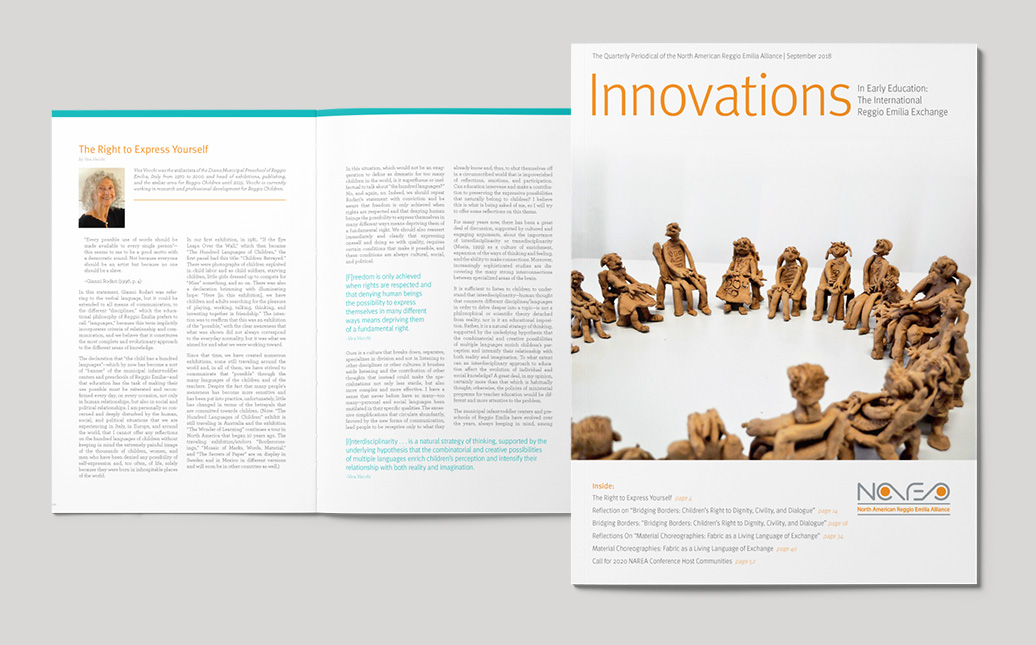
The Right to Express Yourself
Facilitated by: Karyn Callaghan
Capacity of 50 | Education Center | Room: Grand Hall Northwest
A group discussion will be focused on the key aspects of an article by Vea Vecchi titled “The Right to Express Yourself,” published in the fall 2018 issue of Innovations. Vea offers a broad view of the theory of the hundred languages and connects it with the value of difference and social justice aspects. This is an opportunity to make connections between Vea’s thinking and the content from the first two days of the conference.

Session 4
Advocating for Children, Families, and Educators
Facilitated by: Margie Cooper
Capacity of 100+ | Roy E. Disney Center | Room: Bank of America Theatre
Are you committed to contributing to your community by advocating for the rights of children, educators, and families? The NAREA standing chair will share the experiences of North American communities that have hosted exhibition-ateliers from the municipal infant-toddler centers and preschools in Reggio Emilia as well as the impact of the presence of the exhibition in their communities.

Session 5
Self-Directed Tour of NHCC Museum and Torreón
Self-Directed
Open Capacity | New Mexico Welcome Center | Museum Entrance
Explore traditional Hispanic art forms and contemporary narratives through a guided tour. Three galleries showcase artworks from a range of media that focus on diverse subject matter and examine identity and culture. The collections encompass over 3,000 artworks from Hispanic, Chicana/o/x, Latina/o/x/e, and Latin American artists. The self-directed tour of the Mundos de Mestizaje fresco by Frederico Vigil is located in the Torreón on the NHCC Campus. Mundos de Mestizaje depicts thousands of years of Hispanic culture, history, and identity.
Session 6
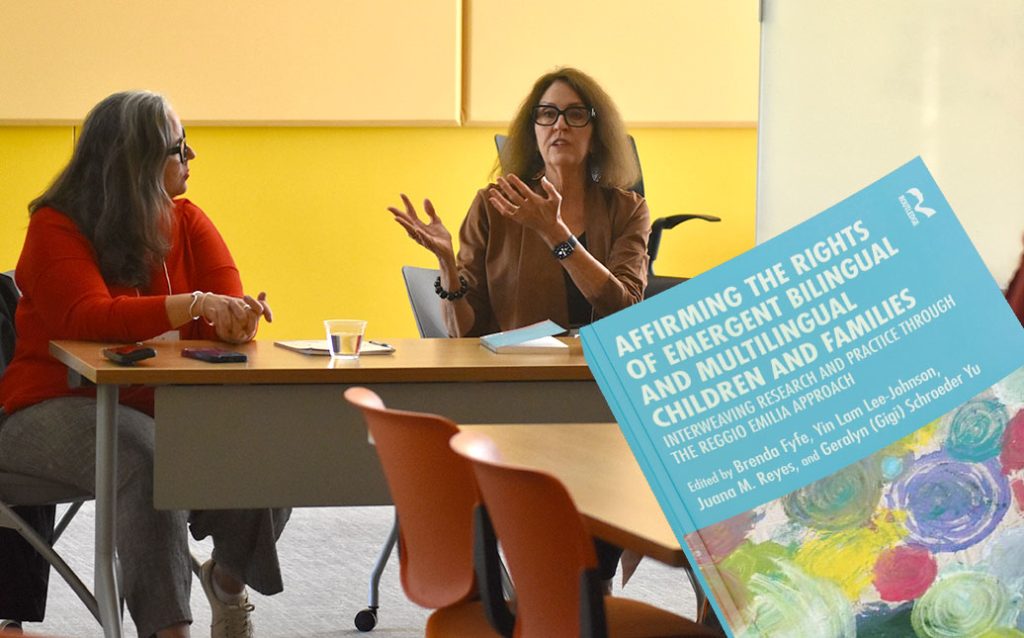
The Making our Mark Project: A Cross-Regional Investigation
Facilitated by: Brenda Fyfe, Gigi Schroeder Yu, Leo Moreno, Arcelia Pineda, Emilee Fecht, Dona Sosa, Marina Carbajal, Sarah Eve Harvey, and Melissa Ruby Salcido
Capacity of 50 | Education Center | Room: Grand Hall Southeast
Participants will explore educators’ and children’s experiences in a year-long pilot study on literacy as aesthetic and embodied knowledge through mark-making, community engagement, and idea exchange in diverse early childhood education settings. The study, informed by Affirming the Rights of Emergent Bilingual and Multilingual Children and Families: Interweaving Research and Practice through the Reggio Emilia Approach (Fyfe, Lee-Johnson, Reyes, and Yu, 2023), involved artists and educators from various urban, rural, U.S./Mexico border, and suburban ECE programs, discussing insights from the Mosaic of Marks, Words, Material exhibition and atelier to support children, families, and educators in their communities.
Saturday Ateliers
Session 1
Encountering Languages of the Body Through Mark-Making
Conducted by: Dona Sosa, Natane Lim, Sarah McKinney, and Jesse Murray
Capacity of 50 | Explora Science Center | Room: Rotary
Discover how the body intertwines with mark-making as a language for expression and communication. Participants will delve into how mark-making inspires bodily movement and how the movement, in turn, produces unique marks. This exploration reveals how the body can articulate thoughts, feelings, processes, and emotions, making them visible through various materials and surfaces.
Session 2
Celebrating the Diversity of Languages: A Colorful Perspective
Conducted by: Baji Rankin, Alvino Sandoval, and Melissa Scott
Capacity of 30 | Explora Science Center | Room: Theater
Explore the profound connection between verbal languages and our identities. This atelier celebrates the power and joy of expressing ourselves through culturally meaningful languages, intertwoven with mark-making. The session culminates in small group collaborations, creating inspired stories through graphic and verbal languages.

Session 3
Visualizing Vibrations and Sound
Conducted by: Taylor Etchemendy and Victoria Roanhorse
Capacity of 40 | Explora Science Center | Room: Community
How can sound become visible? This atelier investigates the transformation of sound and vibration into visual marks. Participants will explore how different weights, textures, and viscosities of natural powders and liquids create ephemeral and permanent marks inspired by various sounds.

Session 4
Encounters with Metallic Mark-Making
Conducted by: Elena Baca and Melanie Akins
Capacity of 20 | Explora Science Center | Room: Lab A
New Mexico’s metallic materials inspire an exploration of their dual nature—bendable vs. sturdy, shiny vs. aged, liquid vs. solid, smooth vs. textured. Participants will investigate how these contrasting properties can transform over time and interact through metallic mark-making.
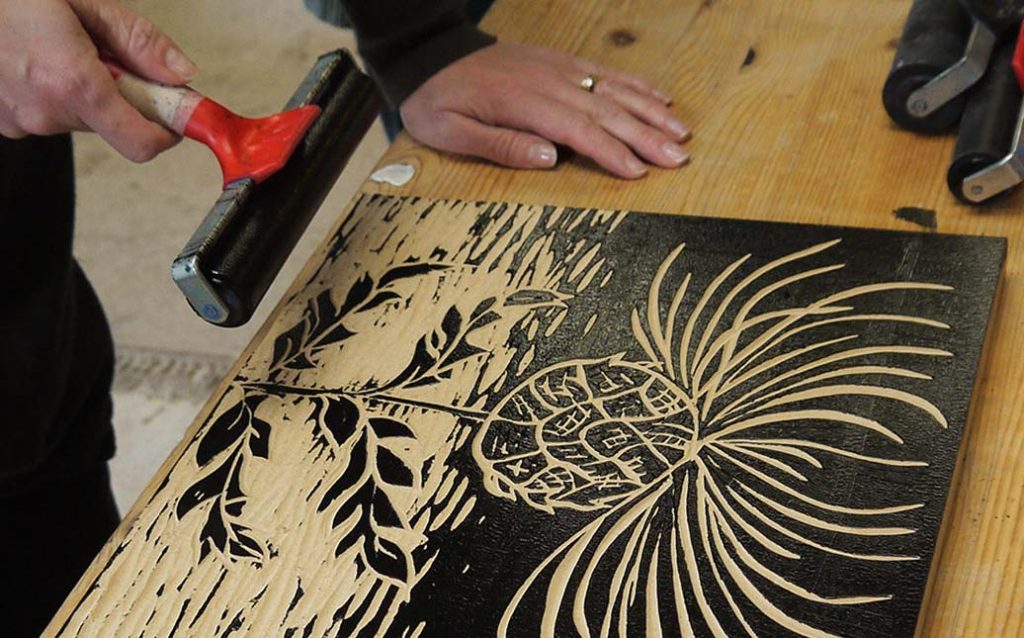
Session 5
Printmaking: Repetition, Rhythm, and Resistance
Conducted by: Shelly Korte, DeMaris Weitzel, and Pam Remstein
Capacity of 30 | Explora Science Center | Room: Lab Y
Dive into the intersectionality of printmaking as a mark-making process. This session explores the layers of reciprocity, resistance, repetition, and rhythm inherent in printmaking, pushing the boundaries between materials and makers and encouraging collective learning.
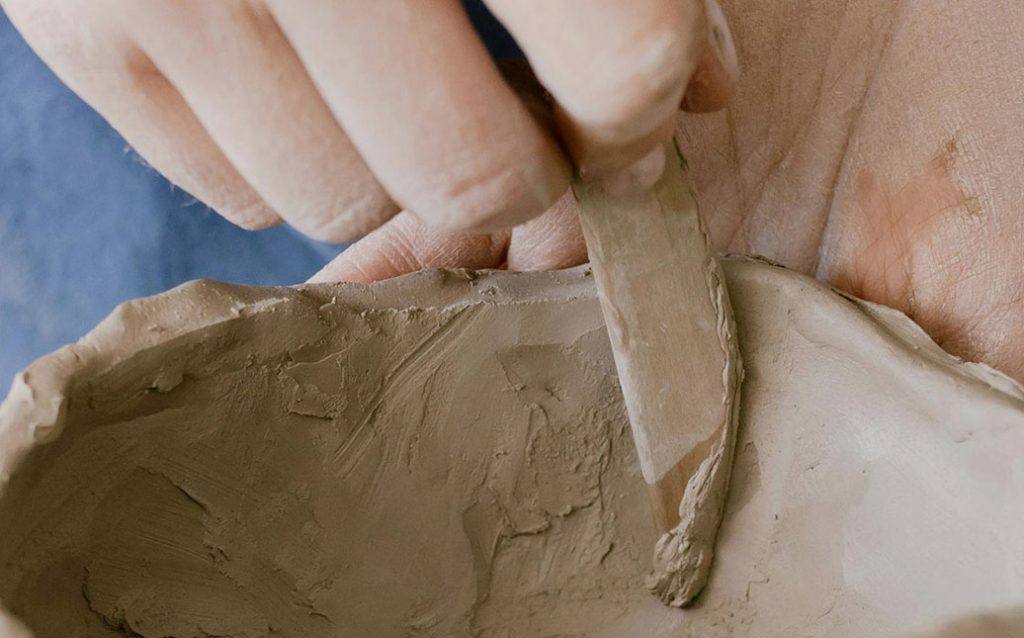
Session 6
Connecting to Place: A Clay Atelier
Conducted by: Hollie Putnam, Marjorie Ruiz, and Ali McPartlon
Capacity of 30 | Explora Science Center | Room: Lab Z
Clay, a powerful connector to the Earth, will deepen participants’ relationships with the Earth, themselves, and others. This session explores how working with clay can attune us to a sense of place, foster connections, and enhance our awareness of geological processes.

Session 7
Mosaic of Marks, Words, Material Exhibition and Atelier
Conducted by: Miranda Chun and Julia Sackett
Capacity of 20 | Explora Science Center | Room: Studio
Experience an exhibition-atelier that documents children’s mark-making from Reggio Emilia, inspiring participants to explore material interactions and narratives. The atelier space invites participants to experiment with their own mark-making using various materials and surfaces.
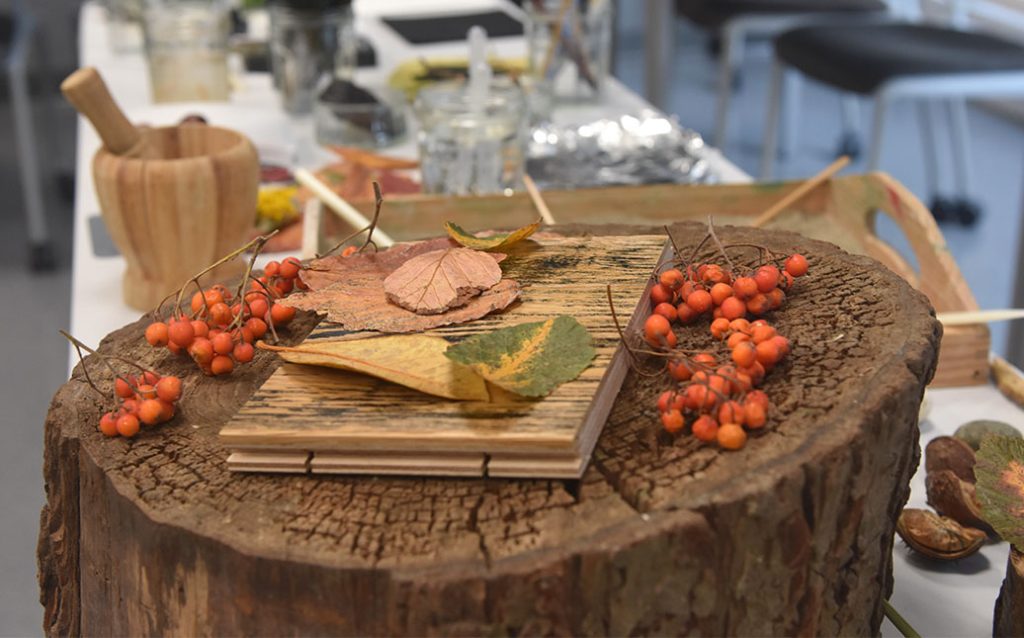
Session 8
Making Marks With Our World: Inspiration From the Exhibition
Conducted by: Gigi Yu and Leo Lundholm
Capacity of 30 | Explora Science Center | Room MP3
Explore the dynamic synergy between language and mental imagery as they converge in the realm of material exploration. Participants find inspiration in the natural world to craft compelling narratives through the transformative power of making marks.
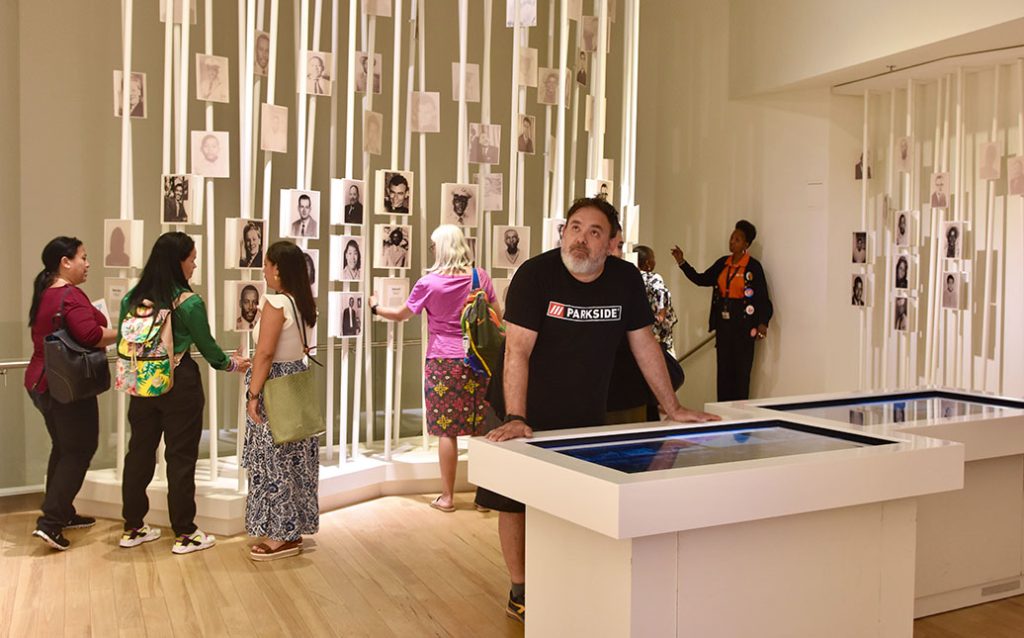
Session 9
Educational Interactive Gallery – Explore, Wonder, Understand: Engaging With Art Through Questioning
Self-Directed
Open Capacity | Albuquerque Museum | 2000 Mountain Road NW
Inspired by John Dewey’s philosophy, this gallery invites participants to explore, wonder, and understand art through questioning. Engage deeply with artworks from the Albuquerque Museum’s collection, forming new connections and encouraging meaningful conversations beyond the artists’ original intentions.
Note: Participants must have their conference badge for entry at no cost
Meet Your Conductors

Melanie is the atelierista at Pinnacle Presbyterian Preschool in Scottsdale, Arizona. She is passionate about curating a space for relationships with materials and others. Inspired by the Reggio Emilia Approach, she works with young children, families, and other educators to foster creativity and exploration.
Elena is the education program manager and visual arts educator at the National Hispanic Cultural Center in Albuquerque, New Mexico. She has over 25 years of experience working in museums, higher education, informal science, and art education. She collaborates with artists to create hands-on art programs for adults and families and works with schools to provide participatory art activities and exhibitions that embrace cultural understanding. In 2022, she was named the Museum Education Art Educator of the Year by the New Mexico Art Education Association.
Miranda is a preschool educator and graduate student in art education at the University of New Mexico. She has worked with young children in diverse environments, from an English immersion kindergarten in South Korea to various play-based centers around Albuquerque, New Mexico. She is passionate about inspiring and supporting young children based on their curiosities and utilizing the arts to cultivate an inclusive, engaging environment.
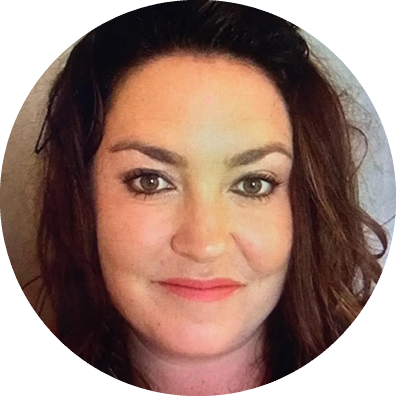
Taylor is the executive director of INSPIRE Bilingual Early Learning Center and Imagine Children’s Museum in Taos, New Mexico, and co-founder of the Collaborative Teachers Institute. She is passionate about supporting whole child and family wellbeing by providing opportunities that acknowledge and celebrate the diverse strengths, unique identities, and many languages that characterize our youngest citizens and their families.

Shelly is an interdisciplinary artist, arts activist, and educator. She is an adjunct professor in art education at the University of New Mexico and a community arts educator at the Albuquerque Museum. Early in her career, she worked as an atelierista, drawing on the Reggio Emilia approach to inform and inspire her teaching.

Natane Lim is a project manager for Embracing Equity and adjunct early childhood faculty at Central New Mexico Community College. She also runs a breakdancing studio, The Dancing Turtle. Early childhood is a passion for her, significantly influenced by the Reggio Emilia ways of teaching.

Leo is the director of education for Child-Parent Centers Inc., a Head Start grantee in southeastern Arizona. She manages all educational services related to Head Start and Early Head Start, including program planning, educational technology, and curriculum design, while maintaining the Reggio Emilia philosophical contexts. She is also a board member of Tucson Children’s Project.

Sarah is the director of Brillante Early Learning Center at Explora. She is passionate about providing accessible, inclusive, and playful learning and care for all children and families.

Alison is the director of Kids Campus, the lab school for the University of New Mexico-Taos Early Childhood Education Department, and co-founder of the Collaborative Teachers Institute. For the past 14 years, she has dedicated her career to supporting children, families, and future educators, inspired by the Reggio Emilia Approach.
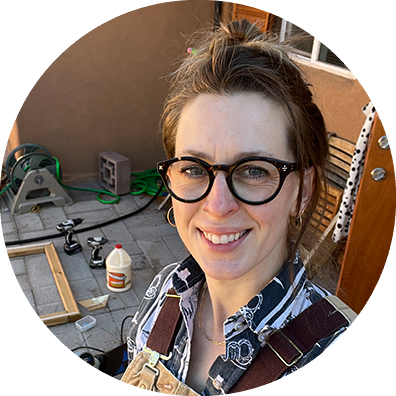
Hollie is an atelierista at Pando Little School in Albuquerque, New Mexico, and a member of the Collaborative Teachers Institute. She combines her experience as a classroom teacher with her background in fine arts to curate and present aesthetic materials to young children.

Baji, an advocacy consultant at Excellence and Equity in Early Childhood Education, has worked in early childhood education for 50 years. She has been a teacher, researcher, scholar, executive, and advocate, with her practice heavily influenced by the Reggio Emilia approach. She works to develop well-educated, diverse, and fairly compensated early childhood educators.
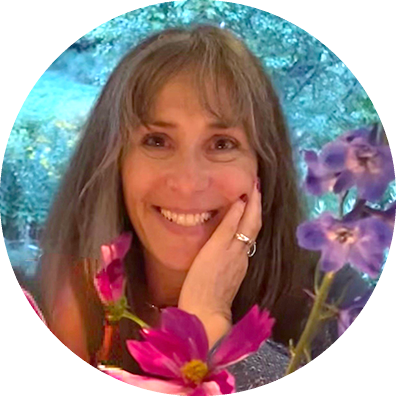
Pam is the program director for Teacher Pathway programs at the University of New Mexico-Taos and an assistant professor of early childhood. As a Reggio-inspired educator, she facilitates a mentor teacher group for the Collaborative Teacher Institute and is creating a Taos County Educators Rising chapter.
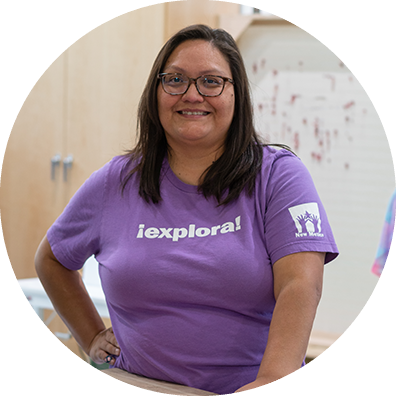
Victoria is an early childhood educator from Crownpoint, New Mexico, on the Navajo Nation. With over 10 years of experience, she holds a BA in psychology from the University of New Mexico and an MEd in curriculum and instruction with an emphasis in early childhood education from Arizona State University. She enjoys bringing the excitement of science, mathematics, art, and engineering to children, families, and educators.

Marjorie is a lead pre-K teacher in the Deer Valley Unified School District in Phoenix, Arizona, and an active collaborator in the Collaborative Educator Institute at Paradise Valley Community College. She focuses on listening, observing, and documenting children’s learning processes, bringing her passion for the arts and a holistic approach to the classroom.
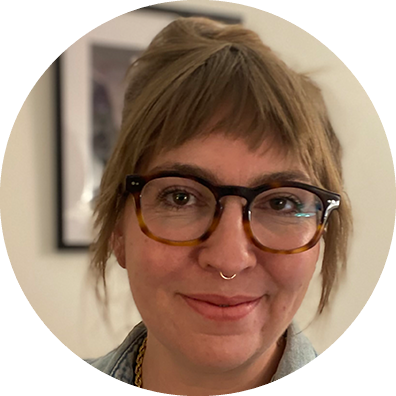
Julia is the director of visitor experience at Explora, with over 12 years of experience in connecting museum visitors with art, science, and culture. Specializing in informal education, she uses a curiosity-driven, play-based approach to foster impactful museum experiences. She holds an MFA from the San Francisco Art Institute and a BA from Hampshire College. When not at Explora, she enjoys playing with her toddler and learning new things in her studio.

Alvino is a teacher with Albuquerque Public Schools. He brings years of experience in early childhood and heritage language maintenance and revitalization efforts.

Melissa is a pedagogista and lead teacher at Pando Little School and a member of the Collaborative Teachers Institute. She is dedicated to modeling and advocating for Reggio-inspired practices in financially and culturally accessible early childhood programs.
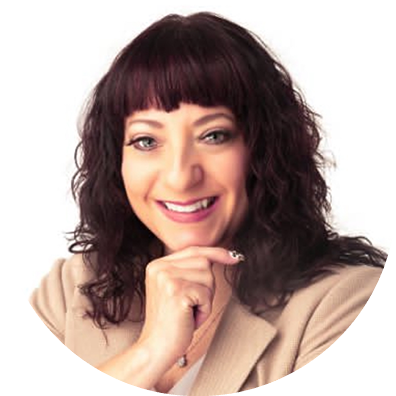
Dona has devoted 22 years to early childhood education. She is a mentor teacher and has served as the Teacher Leader facilitator at her school. Additionally, she is a professional dancer, teacher, and choreographer, currently the assistant director of Sandra’s School of Dance in Albuquerque, New Mexico. She has studied the Reggio Emilia approach for over a decade.

Gigi is an assistant professor in art education at the University of New Mexico and co-founder of the Collaborative Teachers Institute. Her creative work and research are inspired by the early learning programs of Reggio Emilia, Italy, and their respect for children’s artistic languages.
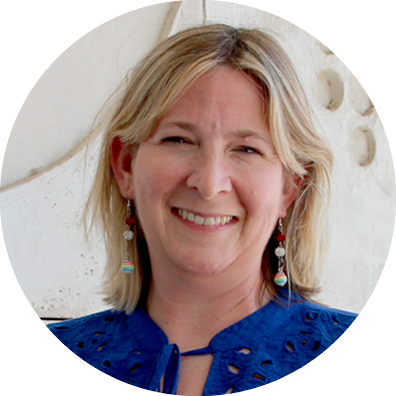
Demaris Weitzel is an early childhood educator and studio coordinator at the Tucson Jewish Community Center in Tucson, Arizona, and special project coordinator with the Tucson Children’s Project. She is inspired by the early learning programs in Reggio Emilia, Italy, particularly their use of materials as an extension of children’s voices and their joy of learning.
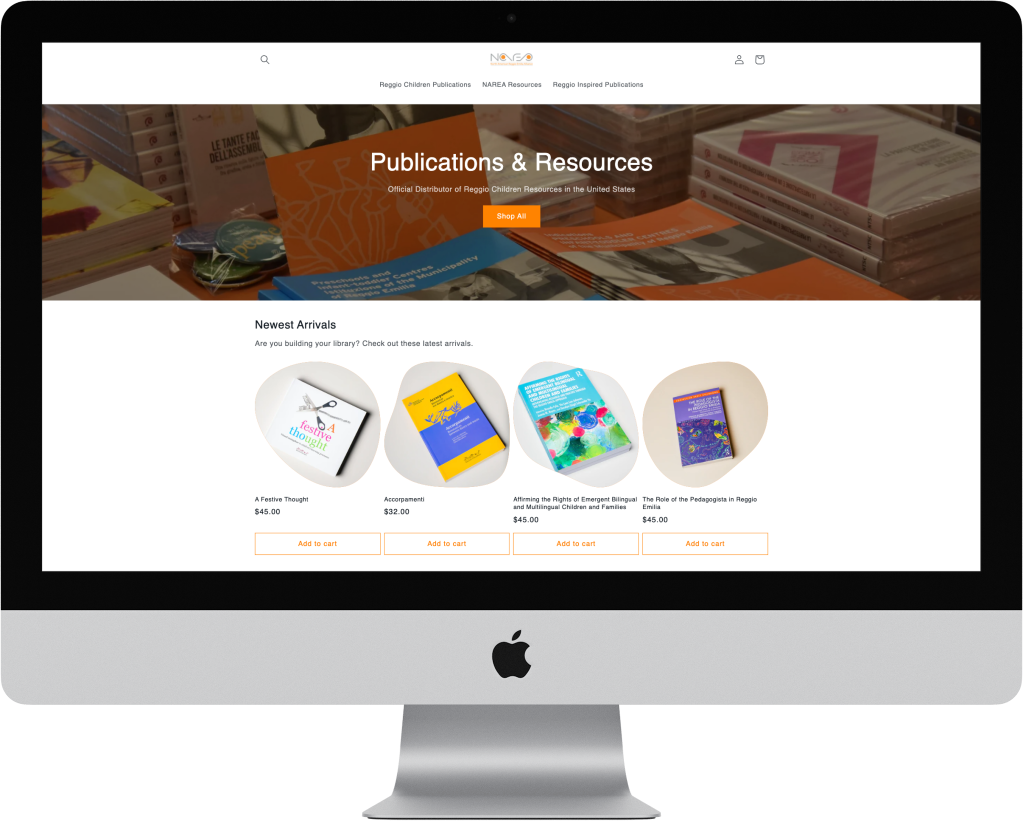
Publications & Resources
Together, we are empowering exceptional education.